
Patchy Beard? Styles a Barber Recommends
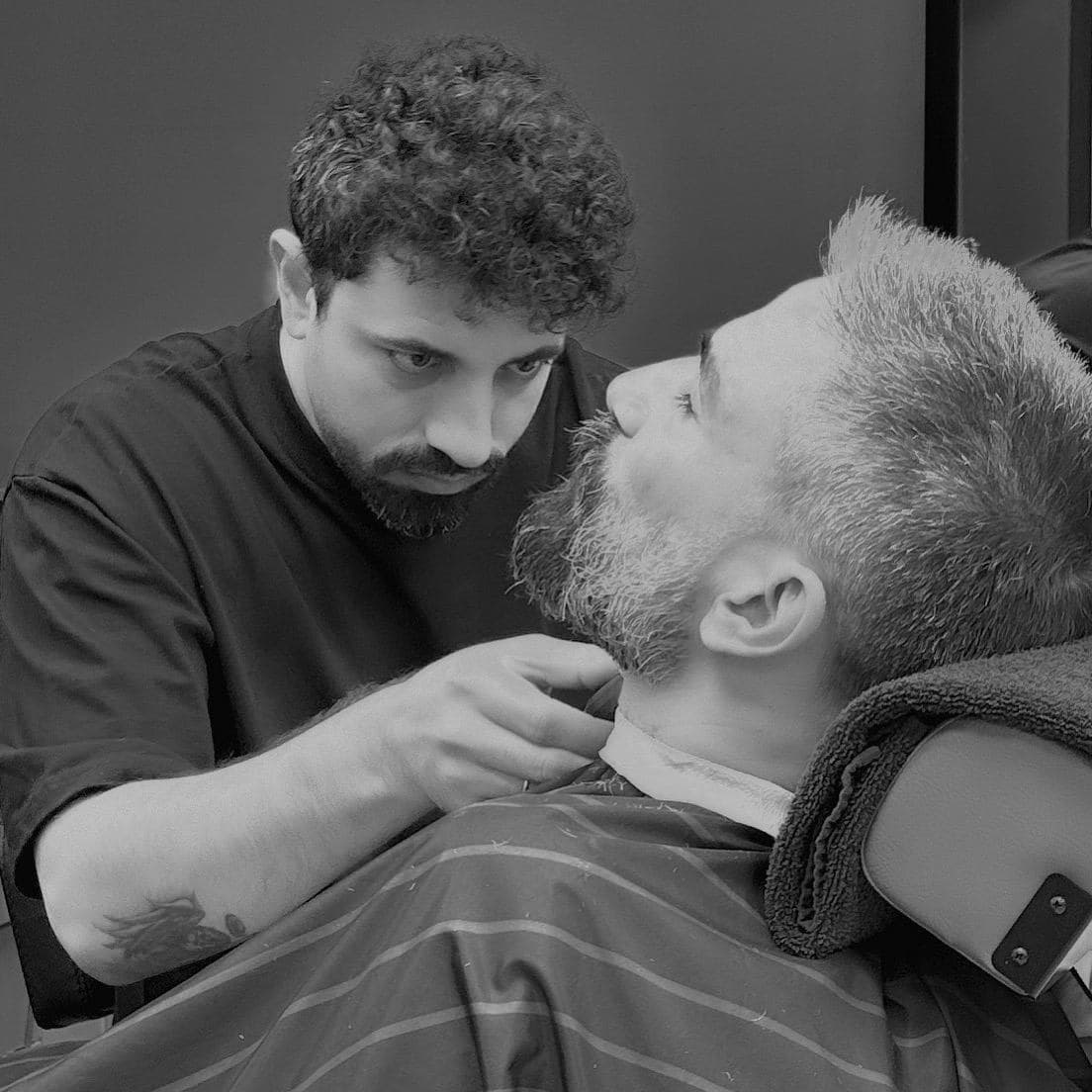
Thin on the cheeks, full at the chin and mustache; or a mustache and chin beard that never quite connect. A patchy or uneven beard can look completely deliberate with the right style. Here's which styles work for a patchy beard, what to steer clear of, and how the lines change everything, told the way we'd explain it in the chair.
Quick answer
With a patchy beard, the aim isn't to hide the gaps but to play up the dense areas. For sparse cheeks, even-length stubble, a goatee, a Balbo or a circle beard works; with reasonable density, so does a short boxed beard. Avoid a long, uneven full beard. Clean cheek and neck lines make a patchy beard look intentional.
What does a patchy or uneven beard actually look like?
When people say their beard is patchy, they usually mean certain areas rather than the whole thing. For many men the mustache and chin grow in fuller than the cheeks, and the upper cheek, up near the cheekbone, is where it's thinnest. Sometimes the issue isn't density at all but connection: there's a gap at the corners of the mouth, and the mustache and chin beard never join.
Unevenness shows up in other ways too. One cheek can be fuller than the other. Sideburns can start strong in front of the ear and thin out as they run down the cheek. The neck and underside of the jaw can be thick while the cheeks are scattered. Colour plays a part as well: light hair looks sparser than dark hair, even at the same density.
Before any shaping, the first step is to map your own beard. In good light, look at it straight on and from both sides. Where is it full, where is it thin, does the mustache meet the chin, and do both cheeks match? The style is chosen from that map. It's where we start in the chair too.
Should you grow a patchy beard out before shaping it?
In the first days of growth, every gap looks bigger than it really is. Hairs grow at different speeds and lie in different directions, and on a very short beard those differences stand out. So rather than shaving it off at the first sight of a patch, it's usually better to leave it alone for a while and decide once it has some length.
That wait isn't a promise of more growth; it's a chance to see what you're working with. Longer hair shows how the beard is really distributed. Some gaps draw less attention once the hair around them grows long enough to lie over them; others stay exactly as they were. Choosing a style before you know which is which is guesswork.
You don't have to let it run wild in the meantime. Taking off the hair below the neckline keeps things tidy even while the beard grows. How long to wait varies from person to person, and asking your barber for an in-between shape based on where it's at is always an option.
One thing sits outside styling: if your beard doesn't grow at all, if new bald spots or patchy loss appear where it used to be full, or if you have itching or redness in the beard area that won't settle, see a dermatologist.
Which beard styles suit sparse cheeks?
The logic is simple: frame the areas that grow well, and either keep the sparse areas short or leave them out of the style altogether. Here's a quick comparison of the options, by the kind of growth each one suits.
Stubble: The whole beard is kept short and at one even length. When the hair is short, the difference between full and thin areas shrinks and the beard reads as a shadow. It's the safest starting point for almost anyone with slightly sparse cheeks; the key is keeping the length even everywhere and the neck clean.
Goatee: The cheeks are shaved and the beard sits on the chin and around the mouth. If your cheeks barely grow but your chin and mustache are full, it's one of the clearest answers. It doesn't have to join the mustache; if there's a gap at the connection, the mustache can stay separate.
Balbo: The mustache is kept apart from the chin beard, the cheeks and sideburns are clean, and the chin beard extends a little along the jawline. It's a good choice if you have gaps at the corners of your mouth but a full chin, because the gap becomes part of the design.
Circle beard: The mustache and chin beard form a rounded frame around the mouth. If the mustache and chin connect but the cheeks are thin, it gathers everything that grows well into one neat shape.
Short boxed beard: Cheeks, chin and mustache are kept short and tidy as a single block. It works if the cheeks are only slightly thin and overall density is decent; the short length stops gaps from standing out. If the cheeks are clearly sparse, try the styles above first.
Chin strap: A thin band that follows the jawline, which needs unbroken growth all along the jaw. It's worth a try if your cheeks are sparse but your jawline is full; if the jawline has gaps too, the strap looks broken up.
What should you avoid with a patchy beard?
A long, uneven full beard: It's tempting to think the gaps will close if you just keep growing. But on a long beard the full areas gain bulk while the thin areas stay as they are, and you end up with a mass that's messy at the edges and thin in places. If you want a full beard, see whether your density can carry it at a short length first.
A cheek line taken too low: Pulling the line down to get rid of a thin upper cheek is the obvious fix. But once the line drops well below its natural position, the beard looks squeezed onto the lower face, like an artificial band, and that area takes a while to grow back. On a sparse upper cheek, the job is usually to clean up the strays, not to move the line.
Leaving different lengths: Keeping the full areas long and the thin areas short increases the contrast and makes the gaps more obvious. On stubble or a short beard, one even length is the simplest way to soften patchiness. The exception is styles that are separated on purpose: on a goatee or a Balbo, the cheeks are fully clean anyway.
Forcing a connection: If there's a gap between the mustache and chin beard, trying to link them with a thin line usually looks weak. Leaving them apart, by switching to a Balbo or a goatee with a separate mustache, gives a cleaner result.
How do the cheek line and neckline tidy up a patchy beard?
What makes a patchy beard look like a choice is often the lines more than the style. A crisp neckline and a cleaned-up upper cheek keep the eye on the shape of the beard rather than its edges. A beard with ragged edges looks unkempt, however dense it is.
Cheek line: On sparse cheeks, a soft line usually works best. A sharp razor line can create hard contrast against the thin area just below it and draw attention to the gap. Removing the odd stray hair above your natural line and keeping the transition soft makes the beard look more complete.
Neckline: With your head level and looking straight ahead, a clean line just above the crease where the underside of the jaw turns into the neck gives even a short beard a clear lower edge. Take it too high and the area under the chin looks empty, which on a patchy beard makes it look even thinner. A clean neck matters most with stubble: the same short beard looks like a decision when the neck is tidy, and like you forgot about it when it isn't.
At home, stick to taking off the hair that grows below the neckline. Redrawing the lines is a job where, on sparse areas especially, a few hairs make a visible difference, and if it goes wrong the only fix is waiting for it to grow back.
How can your haircut help a patchy beard?
Hair and beard draw one silhouette together, and whether patchiness shows depends a lot on how the two meet. The meeting point is the sideburn. If your sideburns start full in front of the ear and thin out down the cheek, the fade or taper in your haircut can be carried on into the beard: the hair gets shorter as it moves down, the sideburn joins the beard through a short blend, and the thin area reads as a natural part of that transition.
With styles that leave the cheeks clean, like a goatee or a Balbo, the sideburns usually end with the haircut. Here, finishing the bottom of the fade cleanly keeps the sides of the face neat and puts the focus on the shape of the beard around the mouth.
Proportion matters too. Short sides with some height on top sit well with short stubble, while a thin beard can disappear under longer hair with volume at the sides. With a patchy beard, the haircut shouldn't ask the beard to carry more weight than it can.
That's why having hair and beard done in one appointment, by the same barber, makes things easier: where the blend starts and how short the beard stays are set as one plan. We cover choosing a style for your face shape in our beard style article.
How do we shape a patchy beard at Patron?
At our salon inside the Folkart Time complex in Bornova, our beard service is beard shaping redesigned around your facial geometry, finished with an Italian Proraso ritual. With a patchy beard, that means first looking at where your beard grows full and where it's thin, then choosing the style around it. We'll tell you plainly which style suits you and why.
Beard shaping on its own is 600 TL. Hair and beard together in one appointment is 1,600 TL. With a beard trim by our founder, Ferdi Bakır, your beard lines are redefined to fit your features; it's 700 TL.
We work by appointment only. Message us on WhatsApp or pick a time through the three-step booking wizard on the site. If you've been growing your beard for a while, come in before you trim it; seeing what we're working with makes the decision easier.
Frequently Asked
What beard style suits a patchy beard?
If your cheeks are sparse but your chin and mustache are full, a goatee, a Balbo or a circle beard makes the most of the dense areas. If the patchiness is mild, even-length stubble or a short boxed beard also works. A long, uneven full beard tends to make the gaps more obvious.
Should I grow out a patchy beard before shaping it?
Usually, yes, because on a very short beard every gap looks bigger than it is. Letting it grow for a while shows how the beard is really distributed, so the style isn't a guess; in the meantime, keeping the neck clean is enough.
What if my mustache and chin beard don't connect?
Leaving them separate usually looks cleaner than forcing a thin connecting line. A Balbo, or a goatee with a separate mustache, turns the gap into part of the style.
Will lowering my cheek line fix a patchy beard?
Usually not. Once the line drops well below its natural position, the beard looks like an artificial band and takes a while to grow back; on a sparse upper cheek, removing strays and keeping the line soft works better.
Can I get my hair and beard done in the same appointment at Patron?
Yes. Hair and beard are done in one appointment for 1,600 TL. Having the same barber handle both means the sideburn-to-beard transition and the balance between hair and beard are set as one plan.
Related services
Reading's over — chair awaits
This piece opened a door to a ritual; step in to try it.